ROBIN LAKOFF
Robin Lakoff, (1975) This was the book Language and Woman's Place. Among these are claims that women:
- Hedge: using phrases like “sort of”, “kind of”, “it seems like”,and so on.
- Use (super)polite forms: “Would you mind...”,“I'd appreciate it if...”, “...if you don't mind”.
- Use tag questions: “You're going to dinner, aren't you?”
- Speak in italics: intonational emphasis equal to underlining words - so, very, quite.
- Use empty adjectives: divine, lovely, adorable, and so on
- Use hypercorrect grammar and pronunciation: English prestige grammar and clear enunciation.
- Use direct quotation: men paraphrase more often.
- Have a special lexicon: women use more words for things like colours, men for sports.
- Use question intonation in declarative statements: women make declarative statements into questions by raising the pitch of their voice at the end of a statement, expressing uncertainty. For example, “What school do you attend? Eton College?”
- Use “wh-” imperatives: (such as, “Why don't you open the door?”)
- Speak less frequently
- Overuse qualifiers: (for example, “I Think that...”)
- Apologise more: (for instance, “I'm sorry, but I think that...”)
- Use modal constructions: (such as can, would, should, ought - “Should we turn up the heat?”)
- Avoid coarse language or expletives
- Use indirect commands and requests: (for example, “My, isn't it cold in here?” - really a request to turn the heat on or close a window)
- Use more intensifiers: especially so and very (for instance, “I am so glad you came!”)
- Lack a sense of humour: women do not tell jokes well and often don't understand the punch line of jokes.
DEBORAH TANNEN
Advice versus understanding
Deborah Tannen claims that, many men find that a complaint is a form of challenge allowing them to find a solution:
“When my mother tells my father she doesn't feel well, he invariably offers to take her to the doctor. Invariably, she is disappointed with his reaction. Like many men, he is focused on what he can do, whereas she wants sympathy.”
Information versus feelings
Historically, men's concerns were seen as more important than those of women, but today this situation may be reversed so that the giving of information and brevity of speech are considered of less value than sharing of emotions and elaboration. From the viewpoint of the language student neither is better (or worse) in any absolute sense.
Orders versus proposals
Women use - “let's”, “why don't we?” or “wouldn't it be good, if we...?” Men may use a direct imperative.
Conflict versus compromise
Deborah Tannen reports “In trying to prevent fights, some women refuse to oppose the will of others openly. But sometimes it's far more effective for a woman to assert herself, even at the risk of conflict.”
This situation is easily observed in work-situations where a management decision seems unattractive - men will often resist it vocally, while women may go with it but complain later. Of course, this is a broad generalization - and for every one of Deborah Tannen's oppositions, we will know of men and women who are exceptions to the norm.
Trudgill made a detailed study in which subjects were grouped by social class and sex. He invited them to speak in a variety of situations, before asking them to read a passage that contained words where the speaker might use one or other of two speech sounds. An example would be verbs ending in -ing, where Trudgill wanted to see whether the speaker dropped the final g and pronounced this as -in'.
Trudgill found that men were less likely and women more likely to use the prestige pronunciation of certain speech sounds. In aiming for higher prestige (above that of their observed social class) the women tended towards hypercorrectness. The men would often use a low prestige pronunciation - thereby seeking covert (hidden) prestige by appearing “tough” or “down to earth”.
Trudgill followed up the direct observation by asking his subjects
about their speech. This supported the view of men as more secure or
less socially aspirational. They claimed to use lower prestige forms
even more than the observation showed. Women, too, claimed to use high
prestige forms more than they were observed to do.
This may be a case of objective evidence supporting a traditional view of women as being more likely to have social class aspirations than men. But it may also be that, as social roles change, this may become less common - as women can gain prestige through work or other activities.
language change-
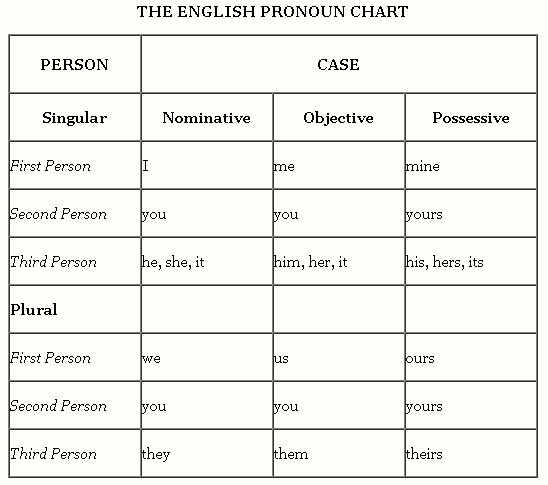
John Kirkby ruled that the male sex was “more comprehensive” than the female, which it therefore included. Nineteenth century grammarians reinforced the resulting idea of male superiority by condemning the use of the neutral pronoun they and their in such statements as, “Anyone can come if they want”. Their argument was an insistence on agreement of number - that anyone and everyone, being singular, could not properly correspond to plural pronouns.
References Used: http://www.teachit.co.uk/armoore/lang/gender.htm
Interruptions and overlapping
Tannen contrasts interruptions and overlapping. Interruption is not the same as merely making a sound while another is speaking. Such a sound can be supportive and affirming - which Tannen calls cooperative overlap, or it can be an attempt to take control of the conversation - an interruption or competitive overlap. This can be explained in terms of claiming and keeping turns - familiar enough ideas in analysing conversation.Peter Trudgill - gender, social class and speech sounds
Peter Trudgill's (1970) research into language and social class showed some interesting differences between men and women.Trudgill made a detailed study in which subjects were grouped by social class and sex. He invited them to speak in a variety of situations, before asking them to read a passage that contained words where the speaker might use one or other of two speech sounds. An example would be verbs ending in -ing, where Trudgill wanted to see whether the speaker dropped the final g and pronounced this as -in'.
Trudgill found that men were less likely and women more likely to use the prestige pronunciation of certain speech sounds. In aiming for higher prestige (above that of their observed social class) the women tended towards hypercorrectness. The men would often use a low prestige pronunciation - thereby seeking covert (hidden) prestige by appearing “tough” or “down to earth”.
This may be a case of objective evidence supporting a traditional view of women as being more likely to have social class aspirations than men. But it may also be that, as social roles change, this may become less common - as women can gain prestige through work or other activities.
language change-
John Kirkby ruled that the male sex was “more comprehensive” than the female, which it therefore included. Nineteenth century grammarians reinforced the resulting idea of male superiority by condemning the use of the neutral pronoun they and their in such statements as, “Anyone can come if they want”. Their argument was an insistence on agreement of number - that anyone and everyone, being singular, could not properly correspond to plural pronouns.
References Used: http://www.teachit.co.uk/armoore/lang/gender.htm

.jpg)