Lexis is a term used when disscussing the vocabulary properties of language. Semantics are used to discuss the meaning and how meaning is produced through language. Semantics also discuss the relationship between lexical items and how it produces a textual cohesion (describes how text is logically structured to produce a coherent sense of meaning).
Word classes are used to refer to the lexical terminology in text:
.jpg)
Determiner- Positioned in front of nouns to elaborate on detail and clarification (e.g. the, a, an).
Classifications of Pronoun:
Person - I, You, She, They
Possessive - My, His, Our, Their
Reflexive - Myself, Himself, Themselves
Demonstrative - This, These, That, Those
Relative - Who, Whom, Which
Personal pronouns alter form depending on their number and their function in a sentence as subject, object or possessive.
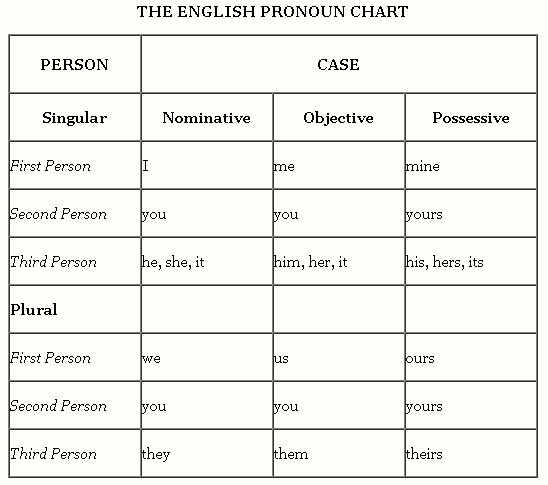
Classification of Nouns:
Proper Noun - in reference to names of people or places (e.g. London, Middlesbrough)
Abstract Noun - in reference to states/feelings/concepts that have no physical existence (e.g. happiness, pain)
Concrete Noun - in reference to objects that have a physical existence (e.g. table, furniture)
Classification of Verbs:
Material Verbs - in reference to the description of actions and events (e.g. hit, run, eat, push , read, paint, remove)
Relational Verbs - in reference to the description of states of being or can be used to identify (e.g. be, appear, seem, become)
Mental Verbs - in reference to the description of perception, thought or speech (e.g. think, speak, believe, love)
Dynamic Verb Processes - in reference to the processes where there is a change in state over time (paint, remove, eat)
Stative Verb Processes - in reference to the processes where the situation stays constant (e.g. love, hold, believe)
Classification of Adjectives and Adverbs:
Base - Small
Comparative - Smaller
Superlative - Smallest
Grammar:
language change does not occur dramatically and over night, instead it does so at a slow rate throughout the years. Through influences of Social Media we have accepted abbreviations in to our everyday conversations, especially via texting (e.g. words like Lol).
References:
AQA English Language B specification AS - Nelson Thomas
http://www.edplace.com/userfiles/image/word%20classification%281%29.jpg
http://josecarilloforum.com/imgs/PronounChart.png

No comments:
Post a Comment